
Subscribe to continue reading
Subscribe to get access to the rest of this post and other subscriber-only content.

Promoting the multidisciplinary study and implementation of fall prevention
Subscribe to get access to the rest of this post and other subscriber-only content.
In accordance with the bylaws of the World Falls Prevention Society, (WFPS) nominations are now open for ten elected representatives to serve on the Executive Council. Positions are available across the following regions:
Elected representatives will serve a six‑year term and may stand for re‑election. Any current member is eligible to nominate for a position relevant to their region. [Click here to join if not already a member]
In accordance with the bylaws of the World Falls Prevention Society, (WFPS) nominations are now open for one Student / Early Career Researcher Representative to serve on the Executive Council.
The elected representative will serve a three‑year term and may stand for re‑election. Any current member [Click here to join if not already a member] who is either:
Please send nominations to the WFPS Secretary at jesper.ryg@regionh.dk.
Nominations close on 16 May 2026 and must include your name, career position e.g. student, country and a seconder who is a current WFPS member. Please provide a one paragraph bio outlining your background, experience in fall prevention and any prior contributions to the WFPS or similar society.
If you need assistance with the nomination process or would like to discuss the role, please contact the Secretary (jesper.ryg@regionh.dk) or the WFPS President, Professor Stephen Lord (s.lord@neura.edu.au).
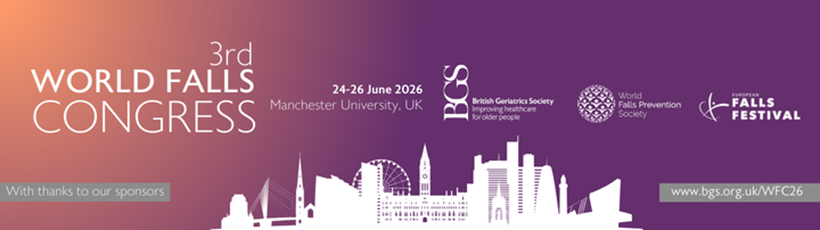
The early bird registration deadline for the 3rd World Falls Congress is fast approaching and closes on 24 March 2026. Early bird registrants receive a 10% discount on all congress fees. In addition, by joining the World Falls Prevention Society, you can access a special member code that provides an extra 40% discount on your Congress registration.

Welcome to the first newsletter of 2026 from the Communications Committee of the World Falls Prevention Society.
We have an exciting year ahead with the 3rd World Falls Congress, coming up in June in Manchester, UK. Planning is underway to create an excellent scientific program, showcasing the amazing breadth of research being conducted across the globe to better understand and prevent falls in older age.
This newsletter contains information about planning your trip, keynote speakers and recent publications. We hope you enjoy it and look forward to seeing you in Manchester!
Best wishes,
Professor Anne Tiedemann and Professor Maw Pin Tan,
on behalf of the World Falls Prevention Society Communications Committee

The purpose of the World Falls Prevention Society (WFPS) is to promote the multidisciplinary study and implementation of fall prevention in older people and clinical groups with balance impairment.
OUR OBJECTIVES ARE:
worldfallssociety.org/3rd-world-falls-congress/
Early bird registration closes on the 24th of March so start planning your travel now!
Abstracts:
We have received a record breaking 399 abstract submissions this year!
We are pleased to report that abstracts have been received from people representing 27 different professions, residing in 33 countries and include a broad range of topics and innovative approaches. The congress is sure to be a stimulating event with plenty of opportunity to connect with colleagues from across the globe.
Reviewers are currently busy reviewing the submissions and authors will be notified of acceptances around the middle of February.
Invited speakers:
We have 12 invited speakers presenting at the congress. These short videos provide an introduction to some of the topics they will cover:
Lara Mitchell
Toby Ellmers
Dawn Skelton
Cathie Sherrington
Devinder Kaur Ajit Singh
Planning your trip:
Manchester Convention Bureau is the official accommodation booking provider for the World Falls Congress 2026.
Through this website you will find accommodation options which are close to the venue, offering best rates available. You can book, modify or cancel your reservation via this site. There are specially negotiated accommodation rates for some of the hotels for a limited period. Please use the access code WFCBGSHOTEL to view these.
This accommodation website will be open until 27th May 2026; however early booking is recommended to ensure you are able to book your preferred hotel.
This event receives support in the form of sponsorship. For details on confirmed sponsors, please see the event webpage. Other than sponsored sessions, they have no input into the programme.
Canadian Geriatrics Society annual scientific meeting, April 23-25 2026, Montreal, Canada. https://www.canadiangeriatrics.ca/2026-asm
International Association of Geriatrics and Gerontology, 5-8 July 2026, Amsterdam, The Netherlands. Home | 23rd IAGG WORLD CONGRESS OF GERONTOLOGY AND GERIATRICS AGEING WELL IN A GLOBALIZED WORLD
The 16th World Conference on Injury Prevention and Safety Promotion (Safety 2026) 2-4 September 2026, Cape Town, South Africa. https://worldsafety.co.za/
11th International Society for Physical Activity and Health Congress, 5-8 October 2026, Mérida, México. https://ispah.org/congress-2026
The World Falls Prevention Society is active on social media. Please follow us on Instagram, Bluesky, Facebook and LinkedIn, like and share our posts, and help us to spread the word about fall prevention!
Instagram: @worldfallssociety
Bluesky: @worldfallssociety.bsky.social
Facebook: World Falls Prevention Society
LinkedIn: World Falls Prevention Society
Do you have new publications or announcements you would like to share on our Instagram account? Please send any content you would like posted to dabreu@fmrp.usp.br
There are many benefits to becoming a member of the World Falls Prevention Society including discounted rates on conferences, webinars and meetings, access to online resources and the opportunity to get involved within the Society through voting or standing in annual elections.
Member categories include regular members ($250 AUD), student and post-doctoral members ($125 AUD) and developing nations members (complimentary). Membership dues are a two year membership, starting January 1 and expiring December 31st of the second year. The current membership period expires December 31, 2026.
For more information visit worldfallssociety.org/membership
Dear colleagues,
Welcome to the second newsletter from the Communications Committee of the World Falls Prevention Society. This week is falls awareness week in many parts of the world. We have been busy spreading the word about fall prevention and the work of the Society on Instagram @worldfallssociety and we are now on LinkedIn and Facebook. Connect with us today! We’ve also been promoting the 3rd World Falls Congress, coming up in June 2026 in Manchester, UK.
We hope you enjoy the newsletter!
Best wishes,
Professor Anne Tiedemann and Professor Maw Pin Tan,
on behalf of the World Falls Prevention Society Communications Committee
The purpose of the World Falls Prevention Society (WFPS) is to promote the multidisciplinary study and implementation of fall prevention in older people and clinical groups with balance impairment.
OUR OBJECTIVES ARE:
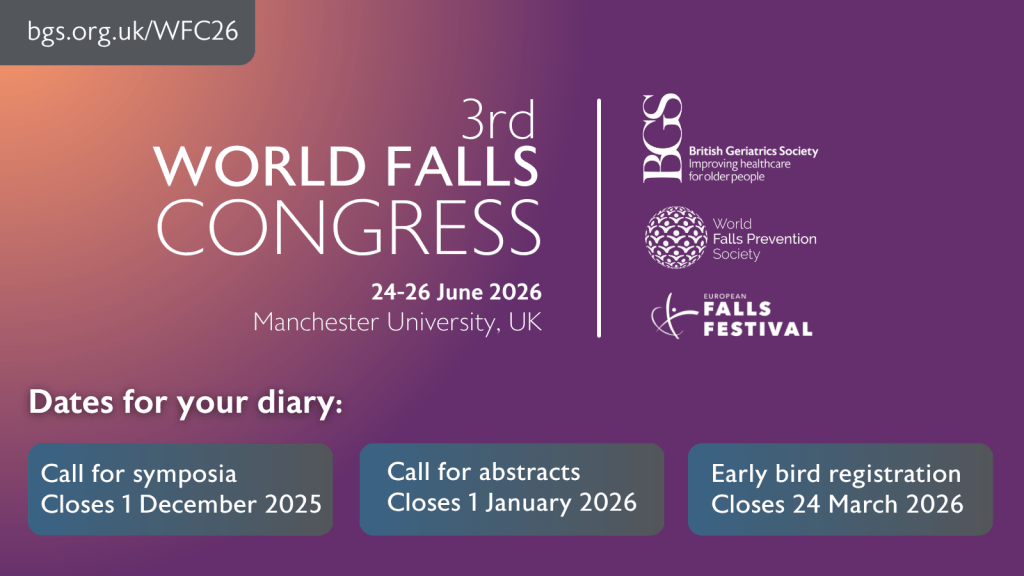
We are looking forward to the World Falls Congress in June 2026! Make a note in your diary of the key dates and we look forward to seeing you in Manchester!
Programme themes:
This conference will cover core areas of interest to all specialists responsible for the healthcare of older people with a particular focus on:
Invited speakers:
Professor Andy Clegg, University of Leeds, United Kingdom.
Topic: eFalls predictions
Professor Dr Devinder Kaur Ajit Singh, Universiti Kebangsaan, Malaysia.
Topic: Falls prevention in LMIC
Professor Manuel Montero-Odasso, University of Western Ontario, Canada.
Topic: Low risk does not mean no risk
Dr Yoshiro Okubo, University of New South Wales, Australia.
Topic: Reactive balance and virtual reality training
Professor Cathie Sherrington, The University of Sydney, Australia.
Topic: Healthy ageing e-health intervention
Professor Dawn Skelton, Glasgow Caledonian University, United Kingdom.
Topic: Falls prevention exercise as medicine: Fidelity and dose matter!
Dr Lara Mitchell, Queen Elizabeth University Hospital, United Kingdom.
Topic: Syncope and cardiovascular disease and the link to falls
Dr Toby Ellmers, Imperial College London, United Kingdom.
Topic: Fear of falling
Dr Louise Tomkow, Salford Royal hospital, United Kingdom.
Topic: Falls presenting to A& E
Professor Celia Gregson, The Health Research Unit of Zimbabwe, Zimbabwe.
Topic: Osteoporosis and fracture risk management
Professor Kathryn Sibley, University of Manitoba, Canada.
Topic: Balance outcome measures
Professor Bo Abrahamsen,University of Southern Denmark, Denmark.
Topic: Vitamin D and falls/fractures
Gerontological Society of America annual scientific meeting, 12-15 November 2025, Boston, USA. https://www.gsa2025.org/
Australia and New Zealand Falls Prevention Society conference, 26-28 November 2025 Sydney, Australia. https://anzfpconference.com.au/
International Association of Geriatrics and Gerontology, 5-8 July 2026, Amsterdam, The Netherlands. https://www.iagg2026.org/
The World Falls Prevention Society is active on social media. Please follow us on Instagram, Bluesky, Facebook and LinkedIn, like and share our posts, and help us to spread the word about fall prevention!
Instagram: @worldfallssociety
Bluesky: @worldfallssociety.bsky.social
Facebook: World Falls Prevention Society
LinkedIn: World Falls Prevention Society
Do you have new publications or announcements you would like to share on our Instagram account? Please send any content you would like posted to dabreu@fmrp.usp.br
There are many benefits to becoming a member of the World Falls Prevention Society including discounted rates on conferences, webinars and meetings, access to online resources and the opportunity to get involved within the Society through voting or standing in annual elections.
Member categories include regular members ($250 AUD), student and post-doctoral members ($125 AUD) and developing nations members (complimentary). Membership dues are a two year membership, starting January 1 and expiring December 31st of the second year. The current membership period expires December 31, 2026.
For more information visit worldfallssociety.org/membership
Dear colleagues,
We hope your year has started well! We are excited to launch the first newsletter from the Communications Committee of the World Falls Prevention Society. The aim of the Communications Committee is to maximise opportunities and facilitate engagement between the Society and its stakeholders. We hope you enjoy the March newsletter!
Follow us on Instagram at @worldfallssociety and Bluesky @worldfallssociety.bsky.social
Best wishes,
Professor Anne Tiedemann and Professor Maw Pin Tan,
on behalf of the World Falls Prevention Society Communications Committee
The purpose of the World Falls Prevention Society (WFPS) is to promote the multidisciplinary study and implementation of fall prevention in older people and clinical groups with balance impairment.
Our objectives are:

Professor Stephen Lord – President
Neuroscience Research Australia, University of NSW, Sydney, Australia

Professor Manuel Montaro Odasso – Vice President
Department of Medicine, University of Western Ontario, London, Canada

Professor Kim Delbaere – Treasurer
Neuroscience Research Australia, University of NSW, Sydney, Australia

Professor Jesper Ryg – Secretary
Department of Geriatric Medicine, Odense University Hospital, Odense, Denmark

Emeritus A/Professor Sebastiana Kalula, The Albertina and Walter Silusu Institute of Ageing in Africa, Capetown, South Africa
Professor Anne Tiedemann, Institute for Musculoskeletal Health, Faculty of Medicine and Health, The University of Sydney, Sydney, Australia
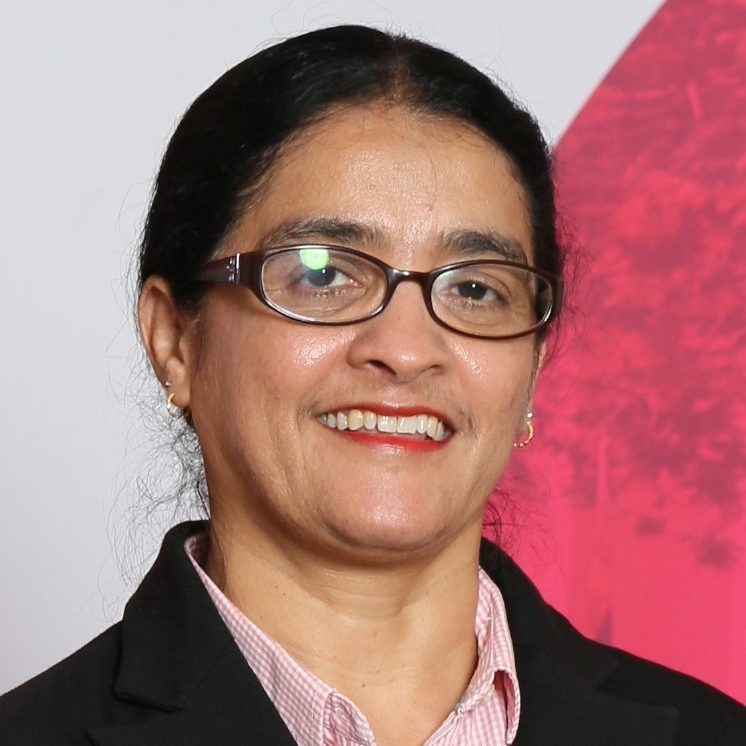
Professor Devinder Kaur Ajit Singh, Center for Healthy Ageing & Wellness, Faculty of Health Sciences, Universiti Kebangsaan Malaysia, Kuala Lumpur, Malaysia

Doctor Jagadish K. Chhetri, National Clinical Research Center for Geriatric Disorders, Xuanwu Hospital of Capital Medical University, Beijing, China

Professor Maw Pin Tan, Department of Medicine, University of Malaya, Kuala Lumpur, Malaysia
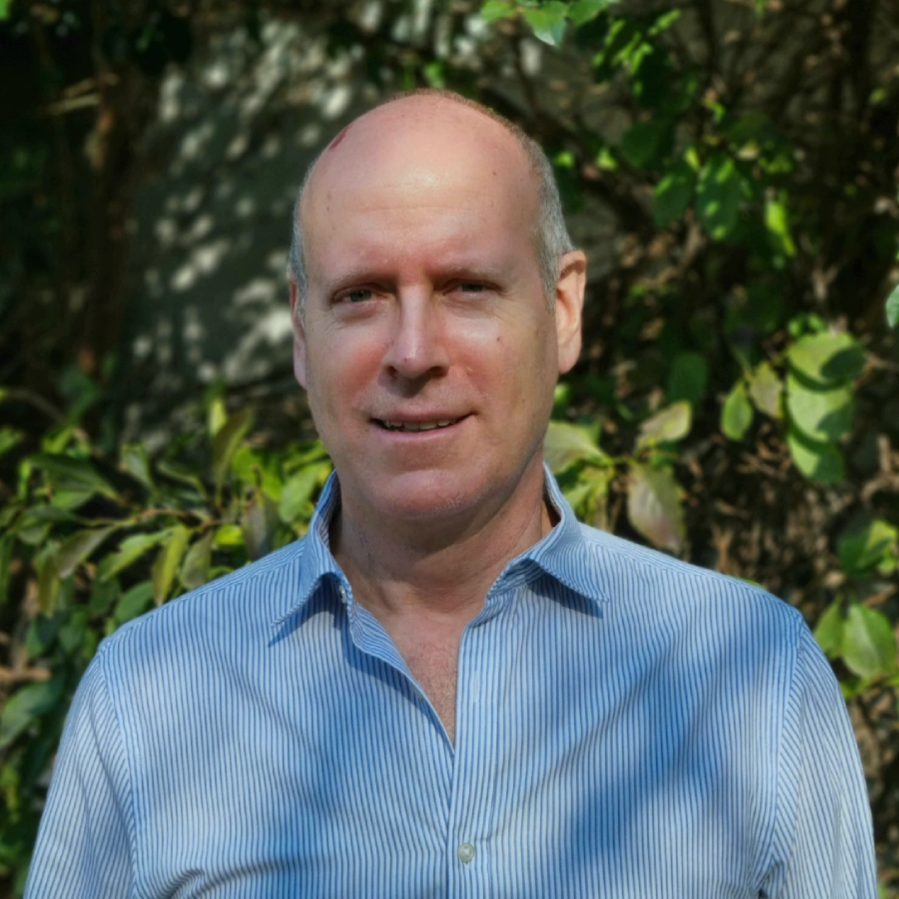
Doctor Marco Schapira, Department of Geriatrics, Hospital Italiano de Buenos Aires, Buenos Aires, Argentina
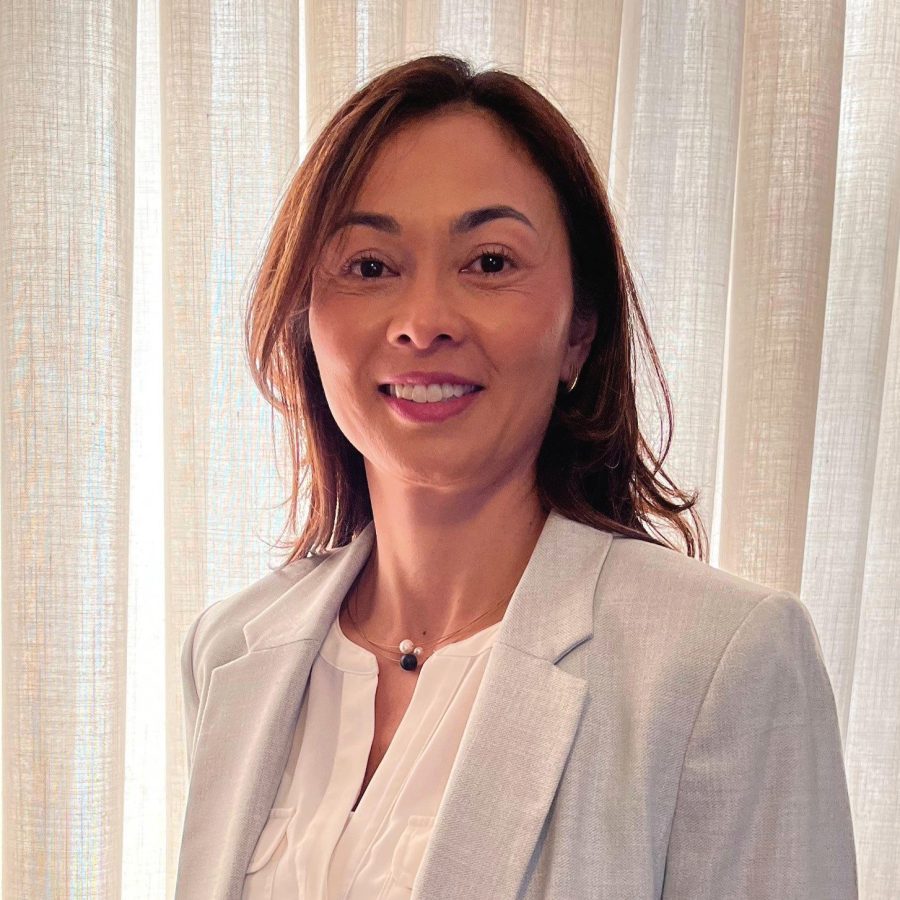
A/Professor Daniela Cristina Carvalho de Abreu, Physical Therapy, Ribeiraro Preto Medical School, Ribeiraro Preto, Brazil

Professor Koen Milisen, Department of Public Health and Primary Care, UZ Leuven, Leuven, Belgium

Professor Nathalie van der Velde, Amsterdam University Medical Center, Amsterdam, The Netherlands

Professor Chris Todd, School of Health Sciences, University of Manchester, Manchester, United Kingdom

Professor Tahir Masud, Nottingham City Hospital, Nottingham, United Kingdom

Professor Teresa Liu-Ambrose, Department of Physical Therapy, University of British Columbia, Vancouver, Canada

Professor Joe Verghese, Professor of Neurology and Medicine, Albert Einstein College of Medicine, Bronx, USA
There are many benefits to becoming a member of the World Falls Prevention Society including discounted rates on conferences, webinars and meetings, access to online resources and the opportunity to get involved within the Society through voting or standing in annual elections.
Member categories include regular members ($250 AUD), student and post-doctoral members ($125 AUD) and developing nations members (complimentary). Membership dues are a two year membership, starting January 1 and expiring December 31st of the second year. The current membership period expires December 31, 2026.
For more information visit worldfallssociety.org/membership
For the latest fall prevention information, follow us on Instagram Bluesky.
Instagram: @worldfallssociety
Bluesky: @worldfallssociety.bsky.social
Do you have new publications or announcements you would like to share on our Instagram account? Please send any content you would like posted to dabreu@fmrp.usp.br
Canadian Geriatrics Society annual scientific meeting, 29-31 May 2025, Toronto, Canada. https://www.canadiangeriatrics.ca/2025-asm
Asian Falls Network and Fragility Fracture Network of Malaysia annual scientific meeting, 12-13 September , 2025, Kuala Lumpur, Malaysia. https://www.afnffnm.com
British Geriatrics Society Falls and Postural Stability Conference, 19 September, 2025, Liverpool, UK. https://www.bgs.org.uk/Falls25
Gerontological Society of America annual scientific meeting, 12-15 November 2025, Boston, USA. https://www.gsa2025.org/
Australia and New Zealand Falls Prevention Society conference, 26-28 November 2025 Sydney, Australia. https://anzfpconference.com.au/
World Falls Congress, 24-26 June 2026, Manchester, UK. https://www.bgs.org.uk/WFC26

 worldfallssociety.org